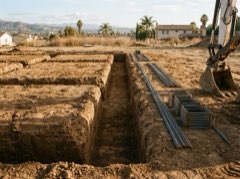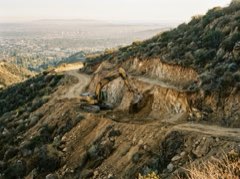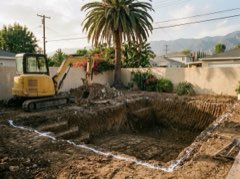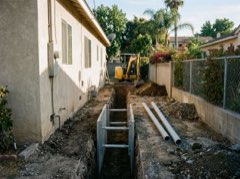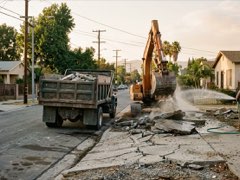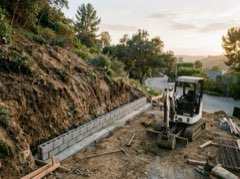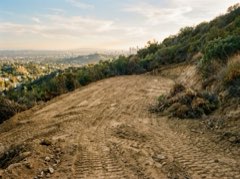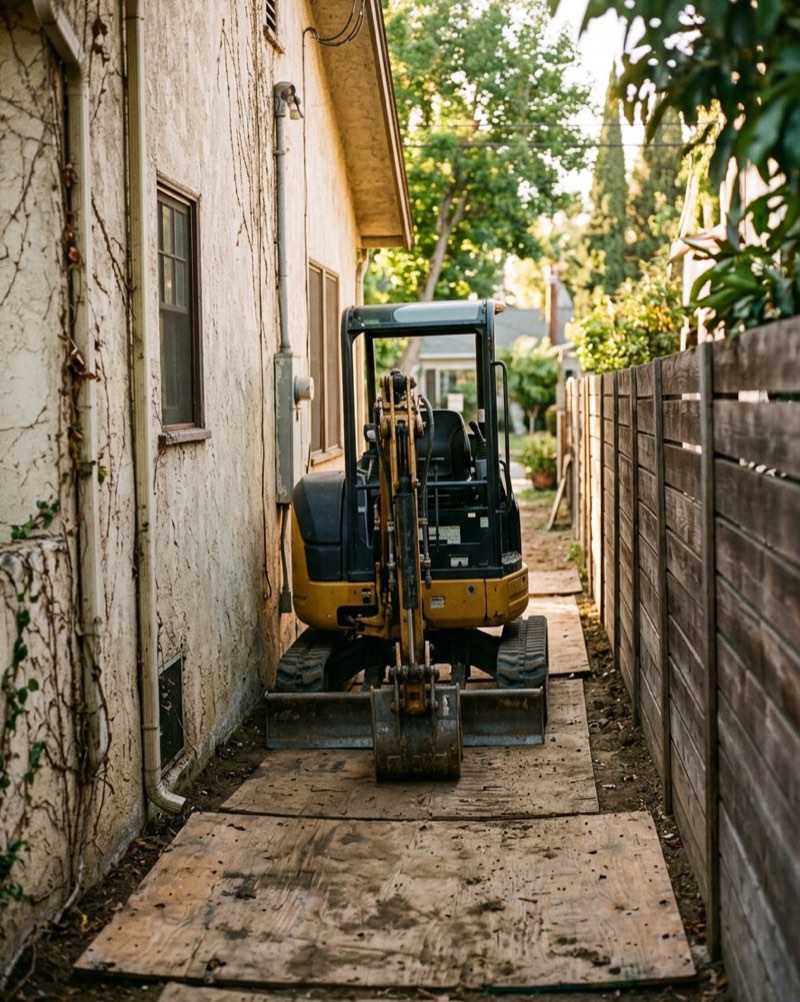
Excavation for ADU pads, foundations, pools, sewer lines and hillside lots across Los Angeles. One crew brings the machines, the trucks and the paperwork.
We'll call to set up a site visit. To talk sooner, call (213) 319-3620
Something went wrong sending your request. Please call (213) 319-3620 and we'll take the details over the phone. Your answers are still filled in below if you'd rather try again.
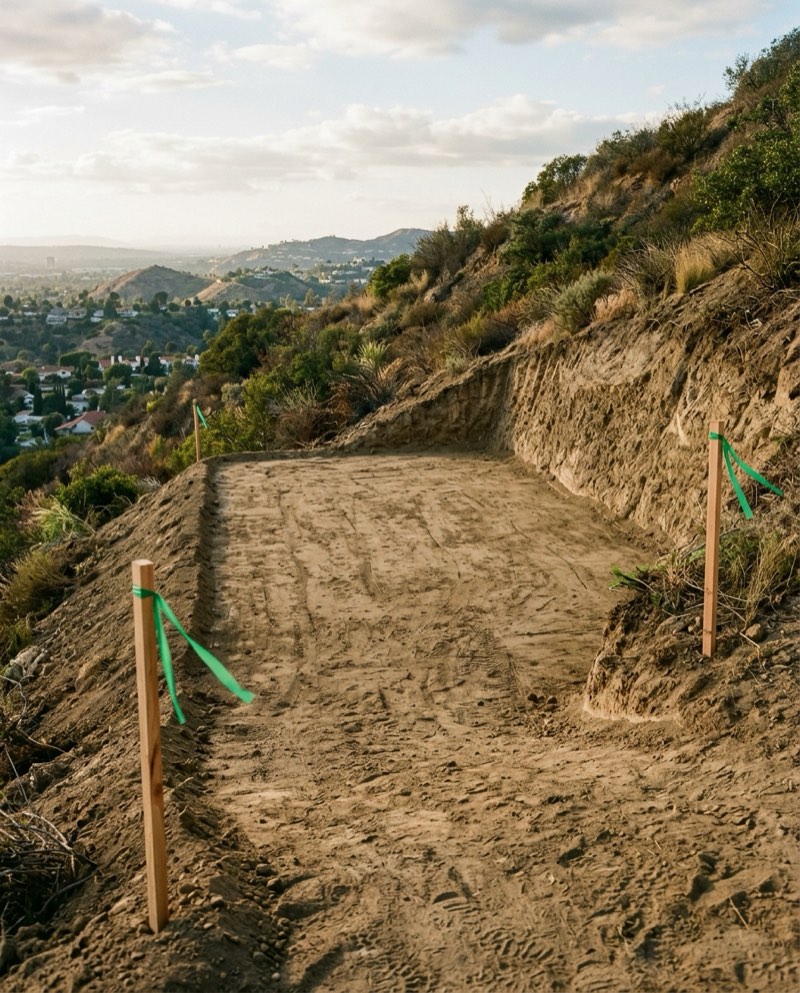
Part of the hill gets cut away and hauled off, a little gets filled and compacted behind a wall, and what’s left is a flat pad the inspector can sign off.
Slope before Cut Fill Grade stakes Illustration, not a real job.
Every job starts with the same three questions: can a machine get in, what’s under the ground, and does the city need a permit first.
| Job | Usual machine | Check this first |
|---|---|---|
| Mini excavator and skid steer through a side yard | Side-yard width, sewer lateral location, and whether the pad needs a soils report | |
| Mini or mid-size excavator | Footing depth and width on the engineer's plans | |
| Excavator, dozer on bigger lots, dump trucks | Grading permit, soils report, and a haul route for large exports | |
| Excavator and a truck line for export | Pool plans, access for trucks, where the dirt goes | |
| Mini excavator or trencher | DigAlert ticket before any digging | |
| Excavator with breaker, dump trucks | Demo permit and dust control | |
| Mini excavator | Wall design and a temporary cut that stays safe | |
| Skid steer and dump trucks | Brush clearance rules in fire zones |
Most delays on a dig are paperwork, not dirt. These are the ones we check before a machine shows up.
California law requires a DigAlert (811) ticket at least two working days before any digging, so gas, water and power lines get marked.
In the City of Los Angeles, most grading needs an LADBS permit. Neighboring cities like Pasadena and Santa Monica run their own.
In LA's hillside areas, moving more than 1,000 cubic yards of soil in or out needs a haul route approved after a public hearing.
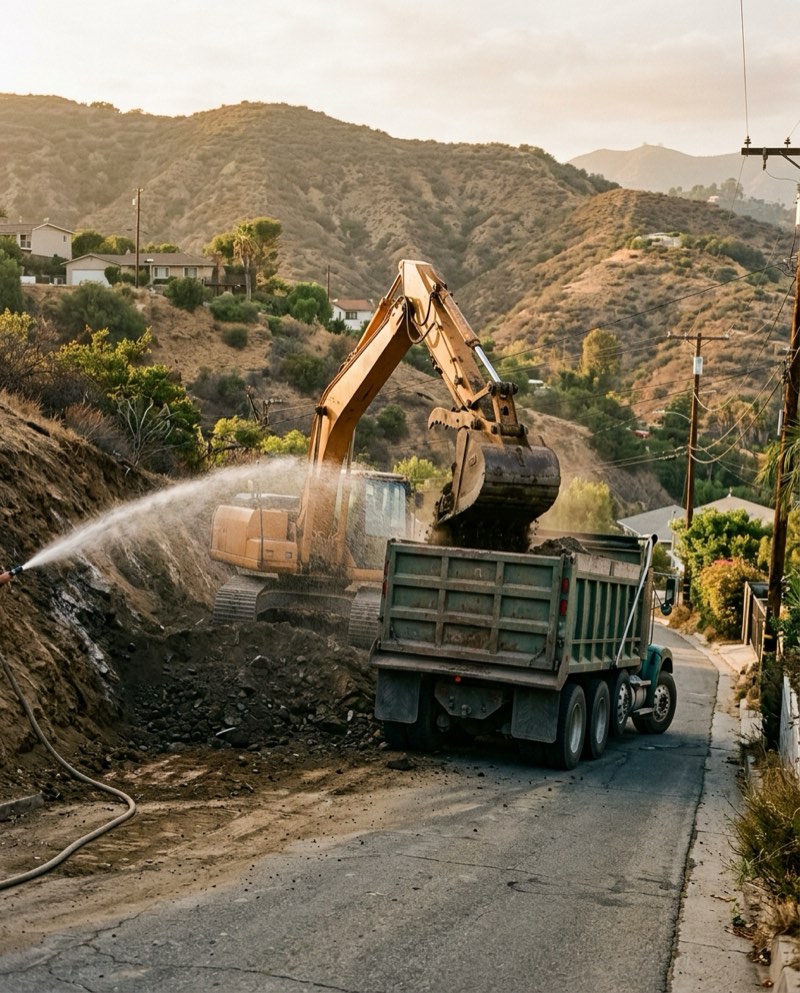
South Coast AQMD Rule 403 keeps dust from leaving the site and dirt off the street. Water and clean exits are part of the job.
Small machines for tight LA lots, trucks lined up for the soil, and water on the dust.


Send the basics and we’ll book a site visit. You’ll know what fits through the side yard, what the city will ask for, and where the soil goes, before anything starts.
The same four steps whether it’s a trench or a hillside.
We walk the lot, measure access, and look at your plans.
DigAlert ticket, permit check, and where the soil will go.
Machines in, soil out, dust and streets kept clean.
Pad or trench finished to plan, ready for the inspector.
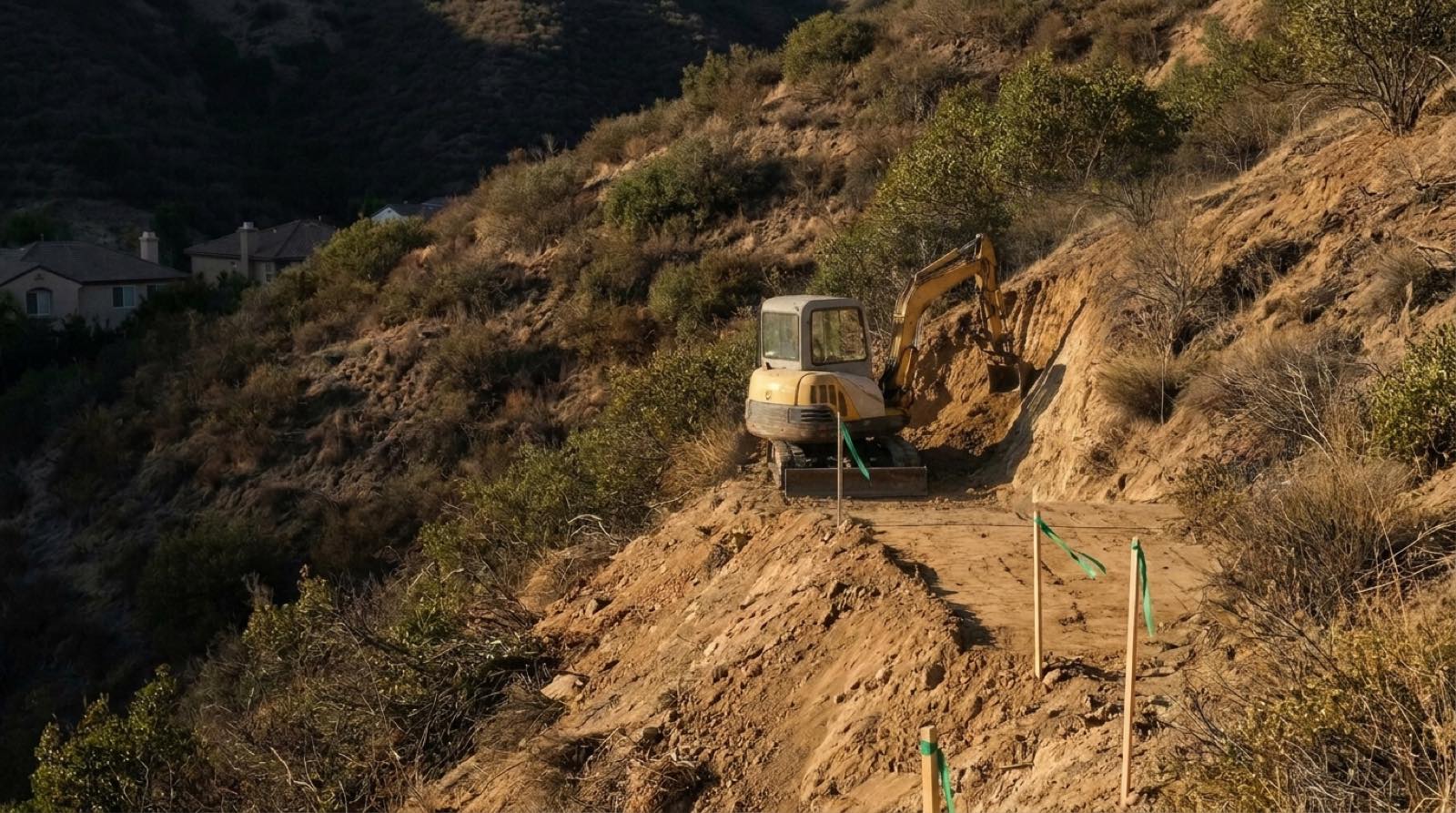
Across the city and the valleys. Areas marked Hillside usually need more permits and planning.
Still unsure what your job needs? A site visit answers most of it.
Often, yes. Compact excavators and skid steers are built for tight access. We measure the narrowest point at the site visit and tell you what fits before we book the job.
In the City of Los Angeles, most grading needs an LADBS permit, and the exemptions are narrow. Pasadena, Glendale, Santa Monica and Culver City run their own permit process. We check your plans and tell you what the city will ask for.
We load it into dump trucks and haul it to a disposal or recycling site, or move it on site if the plans call for fill. In LA's hillside areas, exporting more than 1,000 cubic yards needs an approved haul route.
LA City bans grading from 6 p.m. to 7 a.m. and on Sundays. From October 1 to April 15, larger grading jobs also need an approved erosion-control plan before they start.
Yes. Much of this work is for builders and ADU contractors. Send the plans and we'll work to them.
Address, what you’re building, and any plans you have. The form is at the top of the page, or call:
(213) 319-3620Mon–Sat, 7am–6pm.
Book a site visit